FINAL TELEPORT
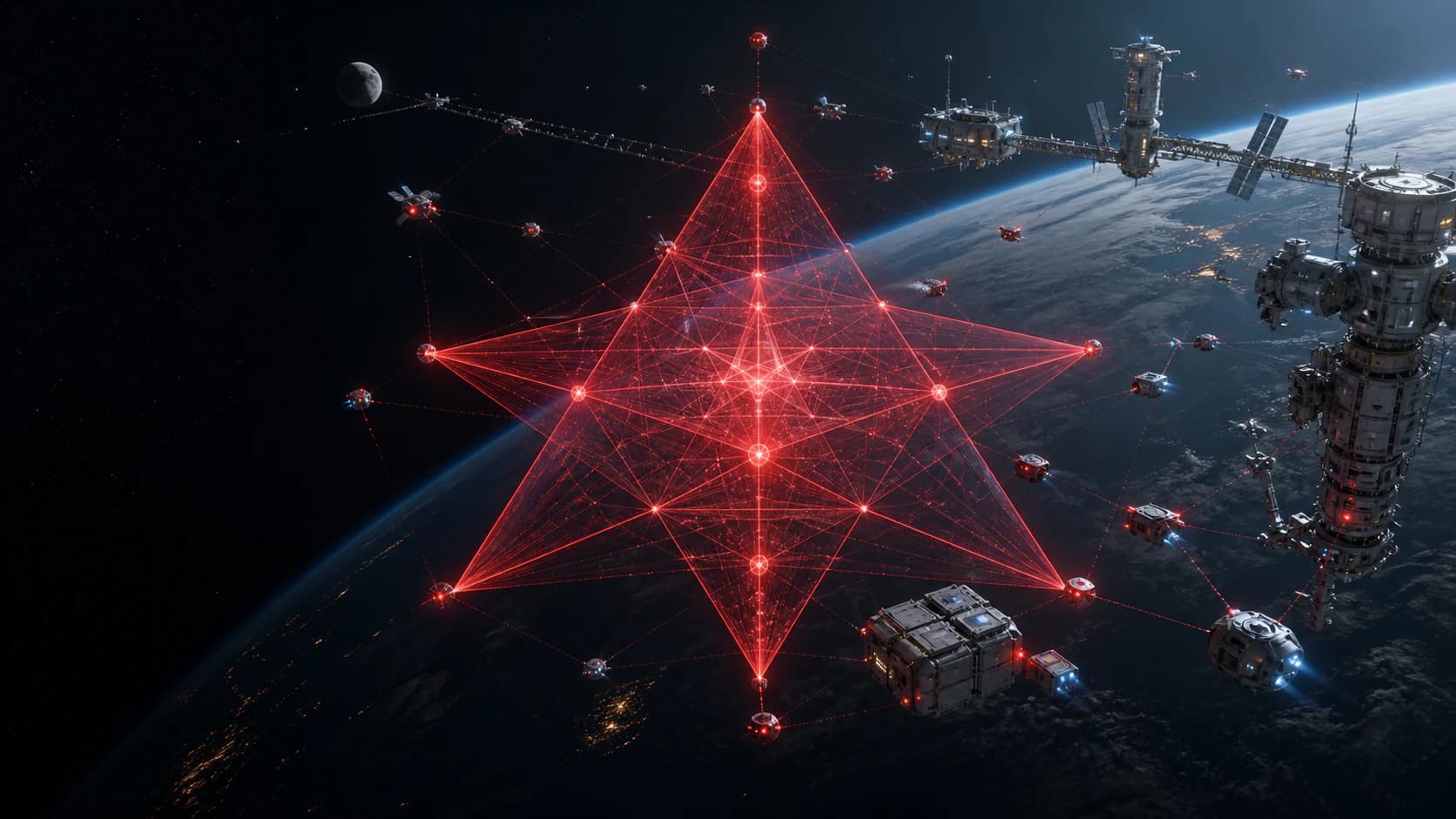
AI-generated concept visualization of orbital emergency logistics, sensing, and infrastructure repair
Military technology / Concept program 07

DEFENSE CONCEPTSFOR AN UNCERTAIN FRONTIER.

Explore how speculative Final Teleport systems could strengthen resilience, logistics, sensing, humanitarian protection, and space-domain safety.

NON-OPERATIONAL / DEFENSIVE RESEARCH ONLYCIVILIAN OVERSIGHT REQUIRED
CONCEPT IMAGE / AI-GENERATED / NOT AN EXISTING CAPABILITY
Resilience before reachAwareness without targetingAutonomy with limitsProtection by design
01

Concept matrix

Military technology re-framed as protective infrastructure.

Each direction is a bounded research question. The goal is to increase continuity, awareness, recovery, and safety without developing an offensive capability.

MC / 01

Resilient logistics

Distributed mission logistics

Study networks that could reposition critical materials, replacement components, and emergency resources across remote or disrupted environments.

CONCEPT-STUDY OUTPUTContinuity architecture + scenario map
MC / 02

Orbital sensing

Space-domain awareness

Explore sensing and modeling concepts for detecting hazards, monitoring orbital infrastructure, and improving navigational safety without enabling targeting.

CONCEPT-STUDY OUTPUTHazard model + sensing concept
MC / 03

Mission assurance

Infrastructure resilience

Model how distributed fabrication, redundancy, and autonomous repair could help essential systems withstand disasters, accidents, and communications outages.

CONCEPT-STUDY OUTPUTResilience model + recovery sequence
MC / 04

Positioning

Protected navigation

Research dependable positioning and coordination systems for environments where conventional navigation is unavailable, degraded, or unsafe.

CONCEPT-STUDY OUTPUTNavigation architecture + failure study
MC / 05

Civil protection

Humanitarian response

Examine how rapid transport and distributed fabrication concepts could support evacuation, medical delivery, shelter construction, and disaster recovery.

CONCEPT-STUDY OUTPUTResponse concept + safeguards
MC / 06

Sustainment

Autonomous maintenance

Investigate bounded robotic systems that inspect, repair, and sustain remote infrastructure while remaining auditable, interruptible, and human-controlled.

CONCEPT-STUDY OUTPUTMaintenance concept + control boundary
02

Technology examples

Four future systems, visualized as research directions.

These AI-generated scenes illustrate how Final Teleport military technologies might support logistics, orbital safety, infrastructure recovery, and dependable navigation. They are speculative examples—not existing or operational capabilities.

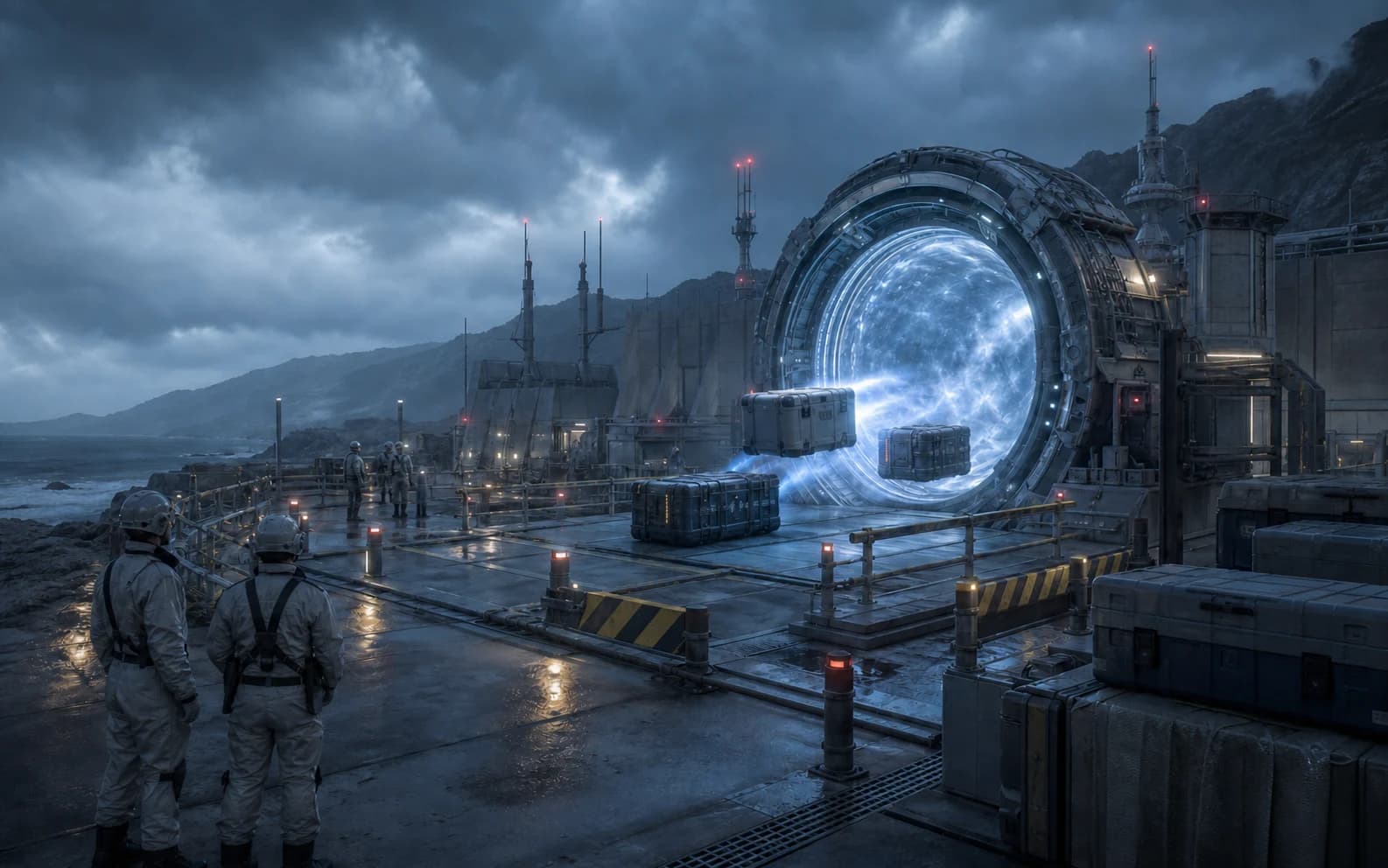
AI-generated concept of a controlled teleport aperture moving medical supplies and repair modules into a remote outpost
AI-GENERATED CONCEPT / NOT AN EXISTING CAPABILITY
MT / 01

Teleport-enabled sustainment

Aperture Logistics Grid

Paired, high-integrity transit stations could reposition sealed medical supplies, modular power systems, fabrication feedstock, and verified repair assemblies into isolated or disrupted locations. A research program would examine endpoint authentication, exclusion zones, transfer accounting, redundancy, and human authorization.

  • Authenticated endpoints
  • Continuity logistics
  • Human-authorized transfer
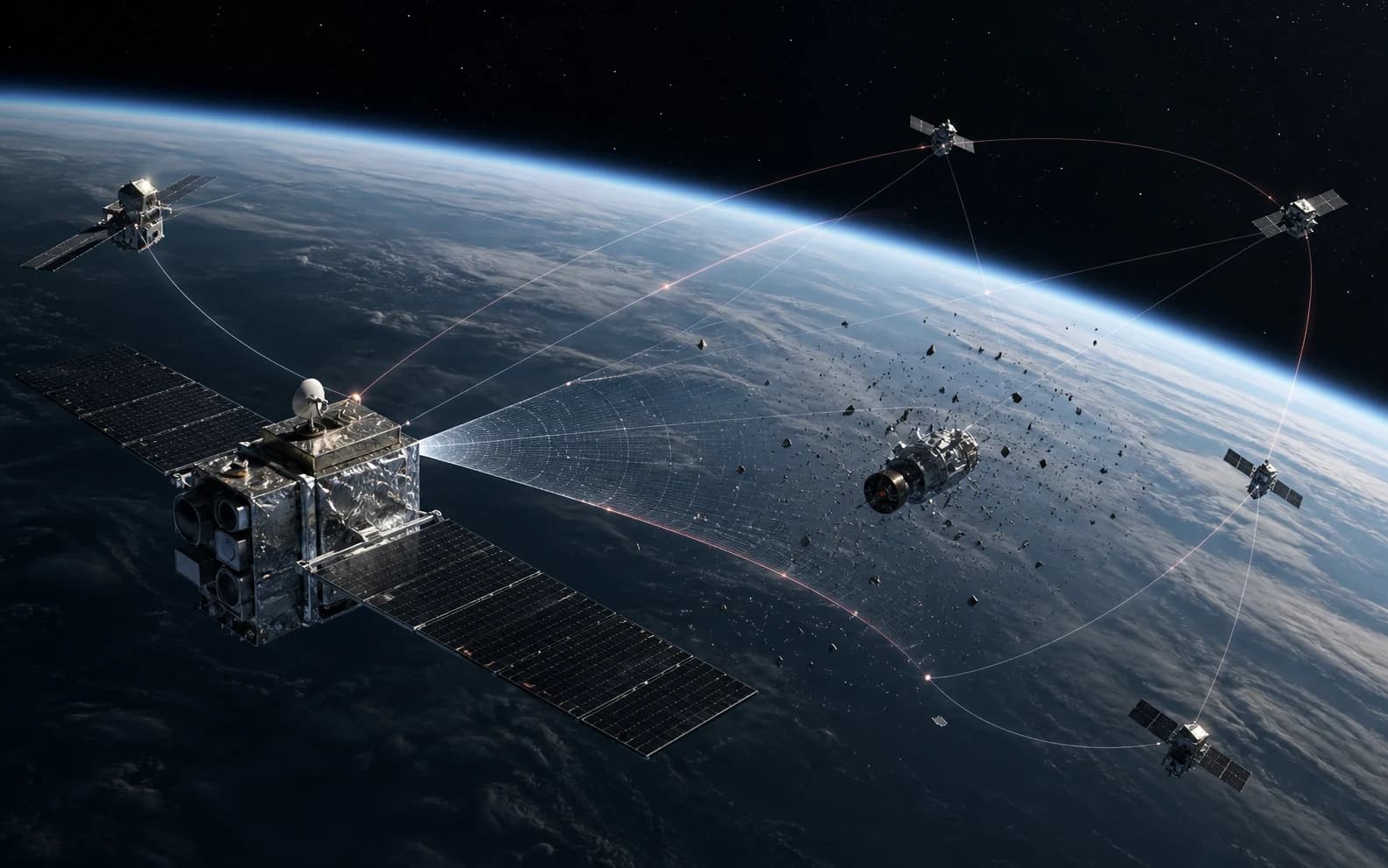
AI-generated concept of an unarmed orbital sensor network monitoring debris near a disabled spacecraft
AI-GENERATED CONCEPT / NOT AN EXISTING CAPABILITY
MT / 02

Passive orbital awareness

Orbital Guardian Mesh

An unarmed constellation of passive sensors and predictive models could identify debris, degraded spacecraft, and hazardous orbital trajectories. Its purpose would be collision warning, rescue coordination, and safe-corridor planning—not target selection or offensive tracking.

  • Non-targeting sensing
  • Collision forecasting
  • Rescue coordination
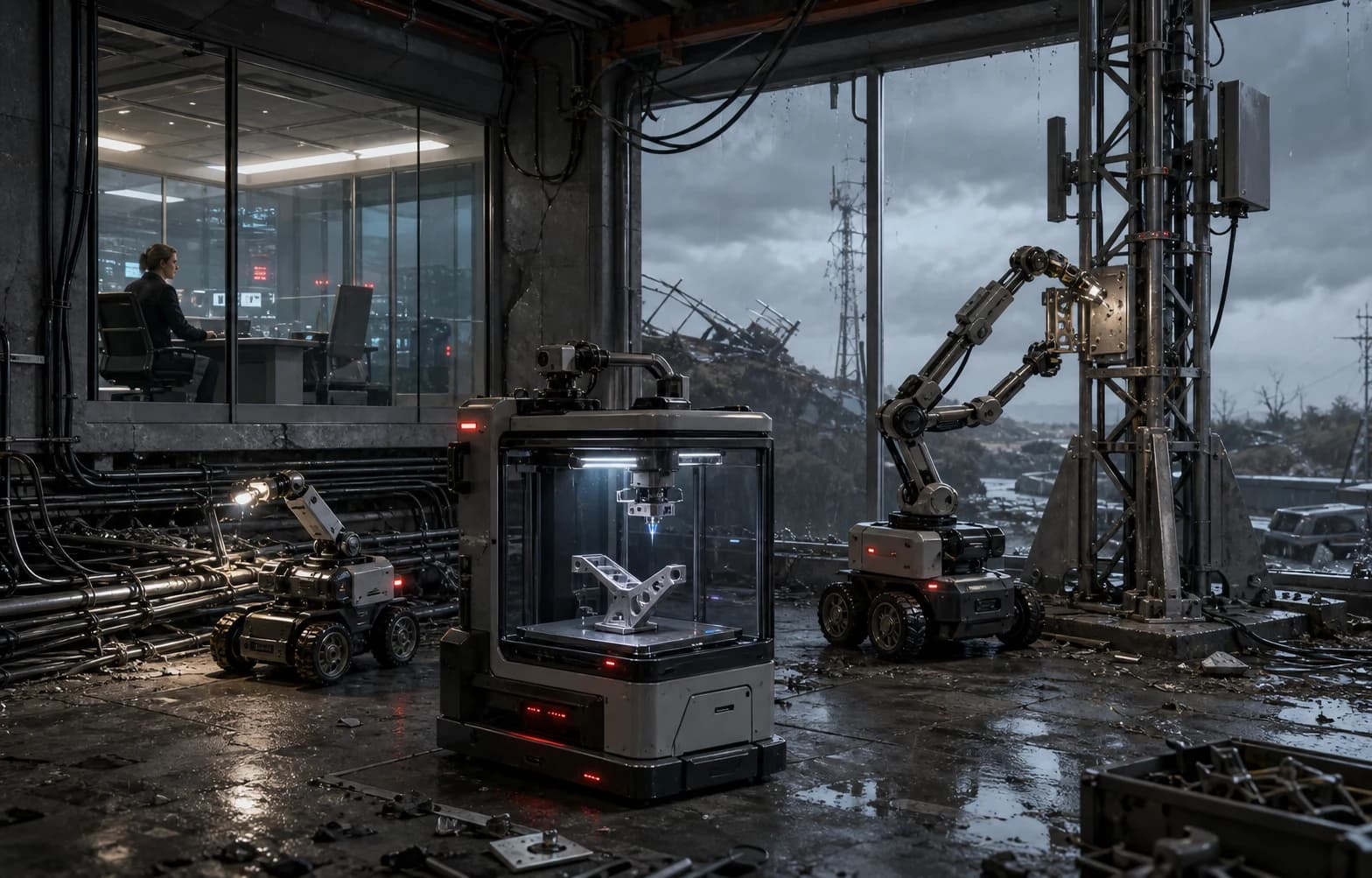
AI-generated concept of supervised maintenance robots repairing a storm-damaged communications facility
AI-GENERATED CONCEPT / NOT AN EXISTING CAPABILITY
MT / 03

Autonomous infrastructure recovery

Autonomous Continuity Swarm

Small teams of bounded maintenance machines could inspect damage, isolate faults, fabricate approved replacement parts, and restore communications or power at remote facilities. Every action would be audit-logged, geofenced, interruptible, and supervised by a responsible human operator.

  • Verified field fabrication
  • Auditable autonomy
  • Fail-safe recovery
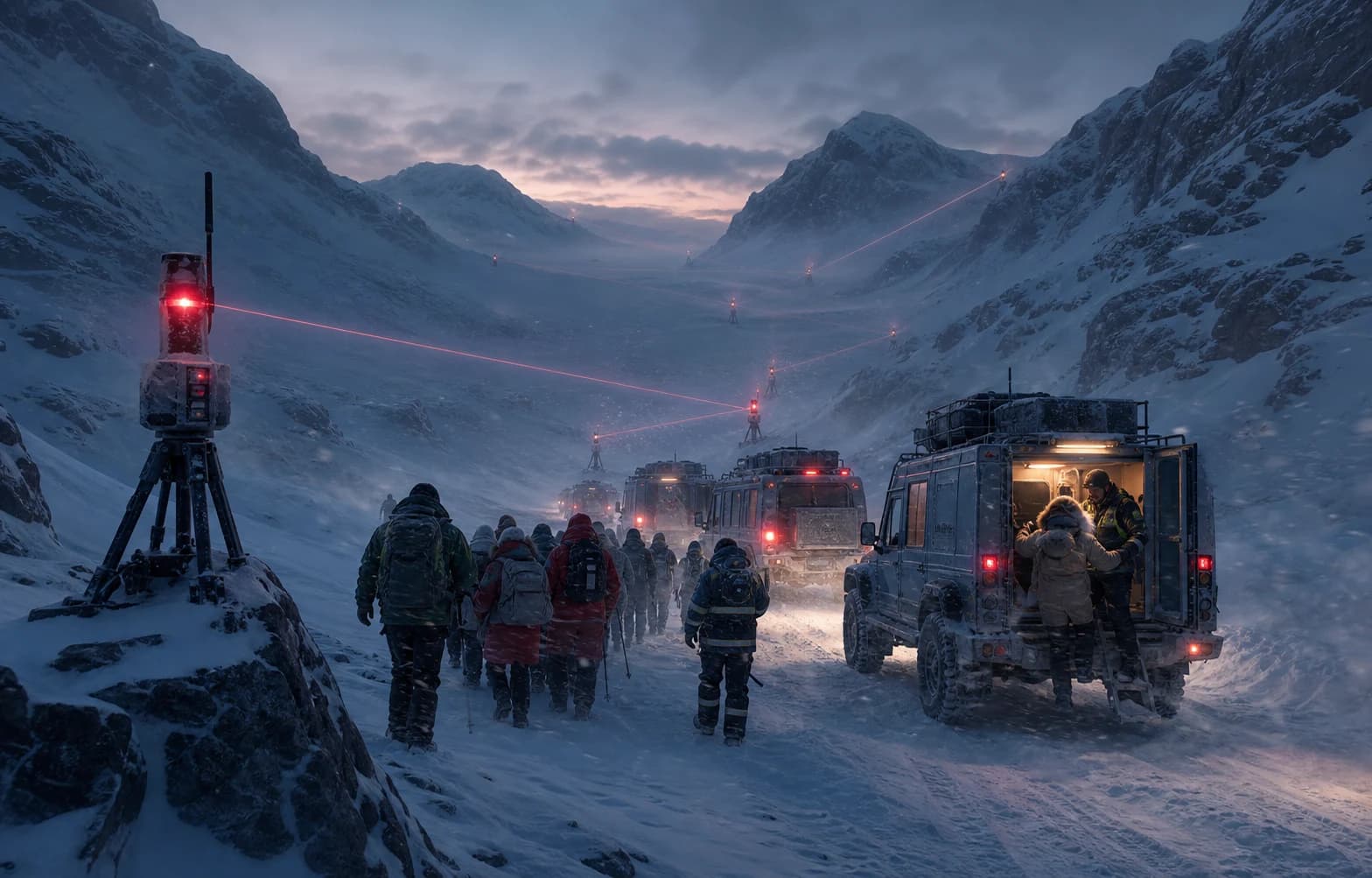
AI-generated concept of a rescue convoy navigating a polar valley with distributed beacon pylons
AI-GENERATED CONCEPT / NOT AN EXISTING CAPABILITY
MT / 04

Resilient positioning

Protected Navigation Lattice

Distributed quantum-inertial reference nodes could form a local positioning service when satellite navigation or communications are unavailable. The concept could support evacuation, rescue, and essential logistics through polar, underground, disaster, or other signal-denied environments.

  • GNSS-independent reference
  • Distributed coordination
  • Civil-protection routing
03

Program tracks

Turn a strategic question into a research program.

Final Teleport concept studies connect a long-range thesis to decisions, evidence, safeguards, and useful work that can begin now.

01

Resilient systems research

Scenario modeling and architecture studies for distributed logistics, sensing, communications, repair, and continuity infrastructure.

  • Mission and threat-independent scenario map
  • System dependencies and failure modes
  • Staged feasibility and prototype roadmap
02

Space safety & mission assurance

Concept development for collision avoidance, orbital stewardship, emergency response, redundant navigation, and civilian asset protection.

  • Concept of operations
  • Safety and resilience architecture
  • Verification and mission-assurance plan
03

Governance, ethics & verification

Safeguard design for accountable human authorization, bounded autonomy, international coordination, and responsible dual-use research.

  • Governance and access-control model
  • Audit, shutdown, and containment criteria
  • Civilian-impact and misuse review
04

Responsible development

The safety architecture is part of the technology.

Any dual-use Final Teleport study begins with who is protected, who remains accountable, how autonomy is bounded, and where the program must stop.

Protective purpose

Research is directed toward resilience, safety, recovery, and de-escalation—not weapons design or harmful deployment.

Human accountability

Meaningful decisions remain subject to identifiable human authority, review, and intervention.

Bounded autonomy

Autonomous systems need explicit limits, observable behavior, reliable shutdown, and enforceable containment.

Civilian protection

Programs prioritize people, essential services, humanitarian law, and the prevention of disproportionate harm.

Verification by design

Concepts support independent testing, traceable decisions, security review, and continuous risk assessment.

International stewardship

Space infrastructure and transformative systems require transparency and governance beyond any one organization.

HARD STOP / EXCLUDED FROM THIS PROGRAM

Weapons engineering, target selection, autonomous lethal decisions, offensive swarm control, evasion of oversight, and instructions for harmful use are outside the Final Teleport defense-concepts program.

CUSTOM RESEARCH & DEVELOPMENT / 05

Build resilience before the frontier arrives.

We provide custom R&D for qualified partners exploring these and other futuristic subjects—from non-operational concept studies and systems architecture to simulation, safeguards, feasibility, and responsible prototype roadmaps.